
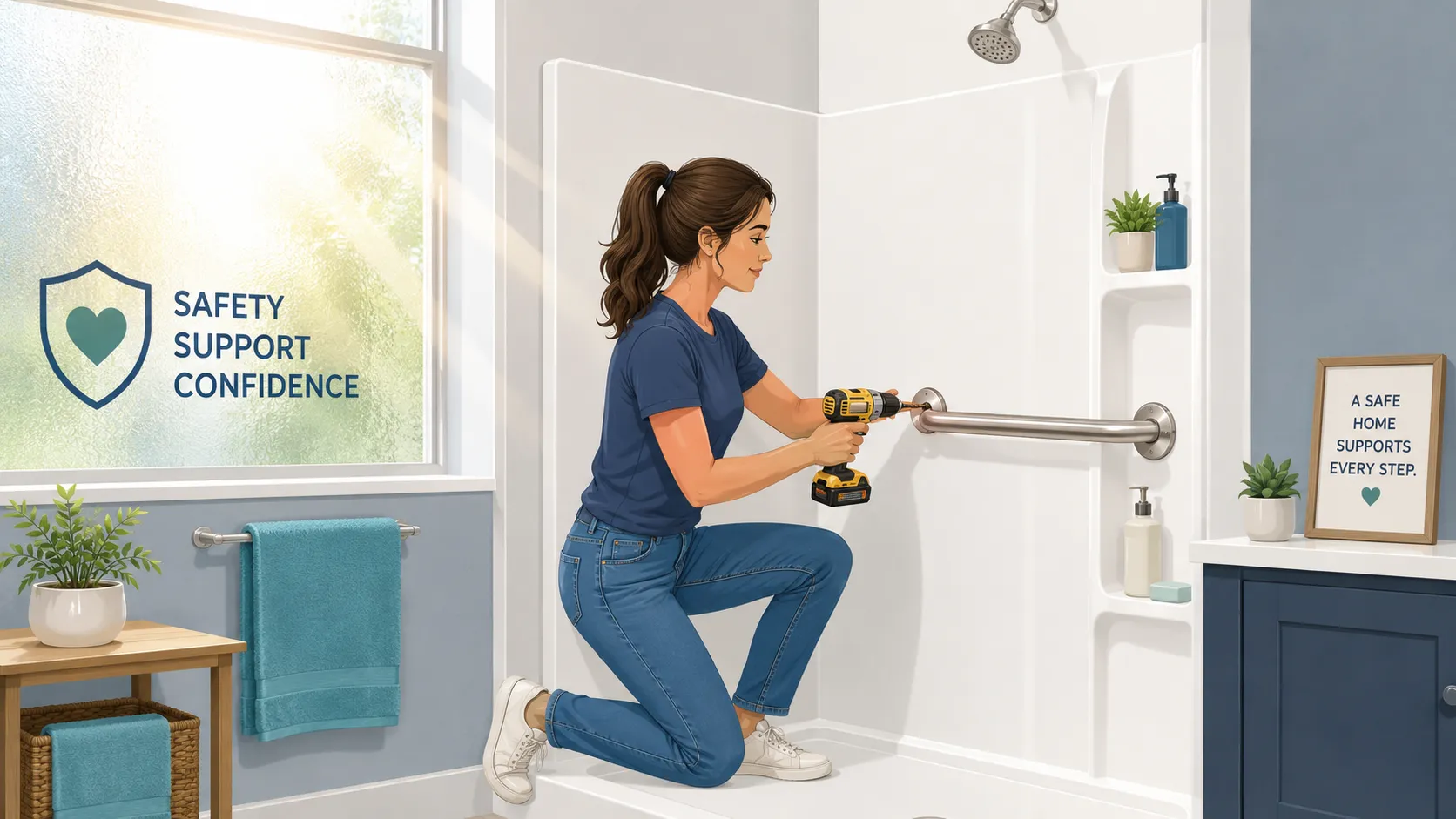
Bathrooms may be among the smallest rooms in a home, but they are also among the most hazardous. Wet surfaces, soap residue, and limited space create the perfect environment for slips and falls. A properly installed grab bar can become the difference between a minor stumble and a serious injury. Whether you are installing one for an elderly family member, someone recovering from surgery, or simply planning ahead for long-term accessibility, grab bars provide dependable support during daily routines.
Many homeowners make the mistake of viewing grab bars as simple accessories. In reality, they are safety devices designed to bear substantial force during unexpected movements. Research consistently shows that bathroom falls account for a significant percentage of household injuries among older adults. A grab bar must be capable of supporting a person’s full body weight in an emergency, not just provide light balance assistance. That requirement makes installation quality just as important as the grab bar itself.
Fiberglass showers present a unique challenge because the visible wall surface often hides hollow spaces between the fiberglass enclosure and the wall framing. Unlike tiled walls installed directly over solid backing, fiberglass surrounds can flex under pressure. This means mounting a grab bar improperly can create a dangerous illusion of security. It may feel solid initially but fail when needed most.
A successful installation starts with understanding the structure behind the wall. Once you know how fiberglass systems are built and where the strongest support points exist, the process becomes far safer and more reliable.
Understanding Fiberglass Shower Construction
The Hidden Space Behind Fiberglass Walls
Fiberglass shower surrounds are popular because they are affordable, water-resistant, and relatively easy to install. What many homeowners do not realize is that the fiberglass surface itself is typically thin and separated from the wall framing by an air gap. This design keeps manufacturing costs low and simplifies installation, but it creates challenges for mounting safety equipment. Imagine trying to hang a heavy punching bag from a thin plastic sheet. No matter how strong the screws appear, the material itself cannot support the load. Fiberglass behaves similarly when subjected to the pulling and twisting forces created by a person grabbing a support bar. Over time, stress can lead to cracking, flexing, or complete failure.
Wall studs hidden behind the enclosure provide the structural strength needed for a safe installation. These vertical framing members are designed to carry building loads and can support properly mounted grab bars. Some shower installations may also contain blocking; horizontal wood reinforcement placed between studs specifically for future grab bar installations. Finding these hidden supports dramatically improves installation options.
The key takeaway is simple: the visible fiberglass surface is not the structure. The structure is the framing hidden behind it.
Why Fiberglass Alone Cannot Support a Grab Bar
Experts consistently advise against mounting grab bars directly into fiberglass. Fiberglass lacks the thickness and structural integrity required to support body weight safely. Even if screws seem secure initially, repeated use can enlarge holes, weaken the material, and eventually cause failure. This is especially important because grab bars are often subjected to sudden loads. When someone slips, they may instinctively place their full weight on the bar within a fraction of a second. The resulting force can be far greater than what occurs during normal use. Safety standards assume grab bars are attached to structural backing rather than decorative wall surfaces. For this reason, every installation decision should prioritize structural support over aesthetics. A slightly different location that connects to solid framing is almost always safer than a perfectly positioned bar attached only to fiberglass.
Finding the Strongest Mounting Points Behind Fiberglass
Locating Wall Studs Accurately
Finding wall studs is the foundation of a successful grab bar installation. A quality stud finder designed to work through fiberglass is often the easiest solution. Painter’s tape can be placed on the wall to mark potential stud locations without damaging the surface. Professional installers frequently verify stud locations multiple times before drilling because even small measurement errors can affect the final result. Another useful technique involves locating plumbing fixtures. Studs are commonly positioned near shower valves, supply lines, and enclosure attachment points. Measuring from known framing locations can provide additional confirmation. Some homeowners also use small inspection holes in adjacent drywall areas when accessible.
The goal is not merely to find wood. The goal is to identify framing members capable of accepting strong fasteners at the precise locations required for the grab bar mounting flanges. Careful planning at this stage can prevent costly mistakes later.
Identifying Existing Blocking Behind the Shower
Blocking is like a hidden safety net built into the wall structure. Builders sometimes install horizontal wood supports between studs in anticipation of future grab bars. When present, blocking can provide excellent mounting opportunities. Community discussions among contractors frequently emphasize the value of blocking for long-term grab bar reliability. Detecting blocking can be difficult because it is concealed behind the enclosure. Areas with less wall flex may indicate its presence. Access from the opposite side of the wall can sometimes allow direct inspection. If remodeling work is already underway, documenting blocking locations with photographs can save considerable time later.
Finding blocking often expands your placement options significantly, allowing grab bars to be installed exactly where they provide the greatest practical support.
Why Stud Location Matters More Than Bar Placement
Structural Strength vs. Visual Convenience
One of the most common installation mistakes is prioritizing appearance over structural integrity. Homeowners sometimes choose the ideal visual location for a grab bar only to discover there is no framing behind it. The temptation then becomes using inadequate anchors or relying solely on fiberglass support.
A better approach is to reverse the decision-making process. Start by identifying strong mounting points, then determine the most effective grab bar position within those constraints. Safety should always outweigh aesthetics. Experts repeatedly emphasize that anchoring into structural framing is the most reliable installation method for fiberglass shower environments. Think of a grab bar like a seatbelt. Nobody chooses a seatbelt location based on decoration. It is placed where it can function effectively during an emergency. Grab bars deserve the same mindset.
The strongest installations transfer loads into studs or structural backing instead of concentrating stress on the fiberglass enclosure. Even if the final position differs slightly from the original plan, the increased safety margin is usually worth the adjustment.
Tools That Make Drilling Cleaner and Safer
Essential Drilling Equipment
The right tools can transform a stressful project into a manageable one. Basic equipment typically includes a stud finder, drill, measuring tape, level, masking tape, silicone sealant, and appropriately sized drill bits. Professional installation guides also recommend marking locations carefully before drilling and using specialized mounting systems when needed.
| Tool | Purpose |
|---|---|
| Stud Finder | Locate framing behind fiberglass |
| Drill | Create mounting holes |
| Level | Ensure proper alignment |
| Painter’s Tape | Reduce surface chipping |
| Silicone Sealant | Waterproof mounting holes |
| Measuring Tape | Accurate placement |
| Safety Glasses | Eye protection |
Precision matters. Even a small alignment error can prevent mounting hardware from engaging properly with studs or backing material.
Safety Equipment You Should Never Skip
Safety glasses are non-negotiable when drilling fiberglass. Tiny fragments can become airborne and cause eye injuries. Gloves help protect hands from sharp edges and fiberglass splinters. Hearing protection is also useful when using power tools in enclosed bathroom spaces.
Taking a few minutes to prepare properly is far easier than dealing with an avoidable injury. Successful installations are not just about getting the grab bar mounted; they are about completing the job safely from start to finish.
Preventing Cracks While Working on Fiberglass Walls
Proper Drilling Techniques
Fiberglass can crack if drilled aggressively. Applying painter’s tape over drilling locations helps reduce surface chipping and provides a clear marking area. Installers often begin with smaller pilot holes before enlarging them gradually to the required diameter. Drill speed matters as well. High speeds generate heat and vibration that can damage the material. A slow, steady approach usually produces cleaner results. Allow the drill bit to do the work instead of forcing it through the surface.
Supporting the wall structure whenever possible also helps minimize stress. The objective is creating clean openings without weakening the surrounding fiberglass.
Common Mistakes That Damage Fiberglass
Several mistakes repeatedly appear in failed installations:
- Using excessive drilling pressure
- Skipping pilot holes
- Overtightening mounting screws
- Ignoring wall flex
- Drilling without verifying stud locations

Jory Vance is a 25-year-old American blogger based in Asheville, North Carolina. He enjoys researching emerging products, building materials, and industry innovations before turning them into approachable articles for a broad audience. As a contributor to rawmaterialsupply.xyz, he focuses on creating informative, trustworthy content backed by careful research and genuine enthusiasm for the subject.