
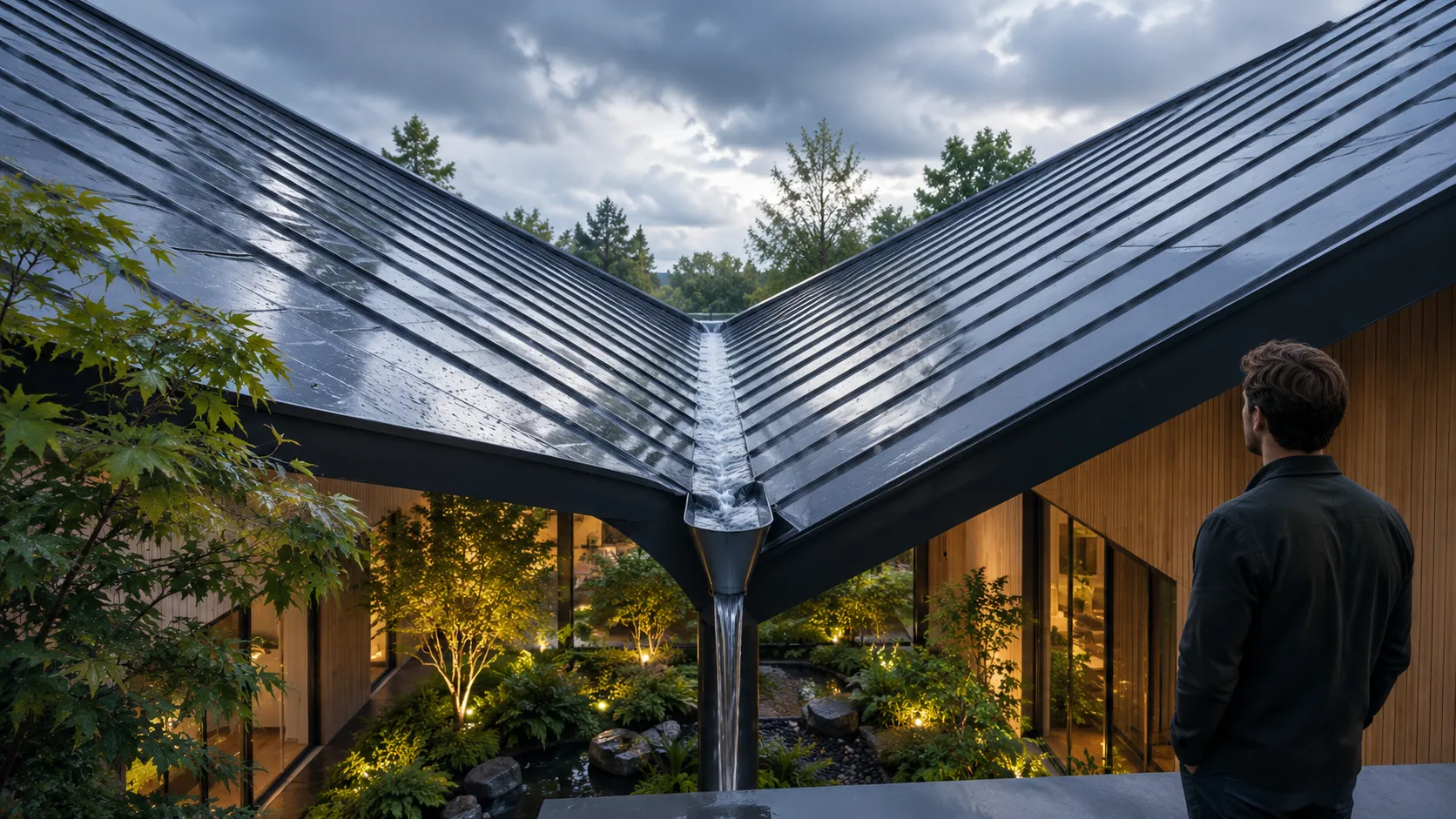
If you imagine your roof as a highway system, the valleys are the busiest intersections. Every drop of rain, melting snow, and debris eventually finds its way into these channels. Because two roof slopes meet in these areas, water flow becomes concentrated instead of being evenly distributed. That concentration makes valleys one of the most vulnerable sections of any roofing system. A beautifully installed roof can still develop leaks if the valley details are neglected.
Industry experts consistently identify valleys as one of the first places where roofing failures occur because of the heavy volume of runoff they experience. Recent roofing guidance emphasizes that proper flashing, underlayment, and panel alignment are essential to long-term durability. Open metal valleys are widely recognized for their ability to improve drainage and simplify maintenance, particularly in regions that experience significant rainfall or snow.
How Valleys Control Water Flow
Roof valleys work like rivers running down a mountain. Instead of allowing water to scatter randomly, they channel runoff into a predictable path. During storms, huge amounts of water travel through these narrow sections. This concentrated movement means even a small mistake can lead to major leaks.
Because valleys carry such heavy water loads, their design must allow water to escape freely without obstruction. Debris, improper fasteners, and poorly aligned panels can interrupt the flow and create standing water. Standing water eventually finds weaknesses, leading to damage inside the structure.
Why Valley Areas Fail More Often Than Other Sections
Unlike flat sections of the roof, valleys face constant pressure from water, leaves, snow, and ice. Thermal expansion and contraction also create stress on materials. These forces work together day after day, making valleys a demanding environment.
Professional roofers know that durability begins underneath the visible surface. Strong underlayment, quality flashing, and careful panel installation create multiple layers of defense. When these elements work together, the valley becomes one of the strongest parts of the roof instead of the weakest.
Why Roof Valleys Need Extra Attention During Installation
Installing a metal roof valley isn’t simply about joining two slopes. It’s about creating a waterproof drainage system capable of handling decades of harsh weather. A valley experiences more wear and tear than almost any other part of the roof. Because of this, extra care during installation pays dividends over the life of the structure.
Studies and roofing specialists highlight that valleys handle greater water volume than surrounding roof sections. This concentrated runoff increases the likelihood of leaks if shortcuts are taken. High-temperature ice and water shields combined with specialized valley flashing have become common recommendations among roofing professionals.
High Water Concentration and Debris Collection
Leaves, twigs, and dirt naturally migrate toward valleys. Over time, these materials can accumulate and restrict water movement. Think of a clogged drain in your kitchen sink. Water begins backing up, searching for another way out. Roof valleys behave similarly.
An open valley design often helps reduce this issue because the exposed metal channel allows debris to wash away more efficiently. Homeowners living near trees especially benefit from this design.
The Cost of Improper Valley Construction
Repairing water damage is never cheap. A minor leak can eventually damage insulation, drywall, framing, and interior finishes. Sometimes homeowners spend thousands of dollars fixing issues that originated from one poorly installed valley.
The lesson is simple: investing time and attention during installation costs far less than correcting problems later.
Choosing Between Open and Closed Valley Designs
One of the most important decisions involves selecting between open and closed valleys. Both systems have their place, but they perform differently depending on climate and roofing materials.
| Feature | Open Valley | Closed Valley |
|---|---|---|
| Water Flow | Excellent | Good |
| Debris Removal | Better | Moderate |
| Inspection Ease | Easy | More Difficult |
| Appearance | Exposed Metal | Hidden Metal |
| Maintenance | Simpler | More Complex |
| Heavy Rain Performance | Outstanding | Good |
Roofing manufacturers and specialists frequently recommend open metal valleys for superior drainage and easier maintenance.
Open Valley Systems
Open valleys leave a metal channel visible. Water flows directly over the exposed flashing without traveling underneath roofing materials. This creates a highly efficient drainage pathway.
Advantages of Open Valleys
Open valleys offer several benefits:
- Superior water management.
- Easier inspection and cleaning.
- Reduced debris buildup.
- Simpler future repairs.
- Better performance during heavy storms.
Many professionals consider open valleys the gold standard for metal roofing applications.
Closed Valley Systems
Closed valleys conceal the flashing beneath roofing panels. They create a smooth appearance and can work effectively when installed properly.
When Closed Valleys Are Appropriate
Closed valleys may appeal to homeowners who prioritize appearance. However, they demand precise installation. Improper cutting or debris accumulation can reduce their long-term performance.
Although both systems are accepted, roofing communities frequently note that open valleys simplify maintenance and improve drainage.
Measuring and Cutting Panels for a Cleaner Fit
Accurate measurements are the secret behind professional-looking valleys. Even premium materials cannot compensate for sloppy cuts. Precision creates symmetry, improves water flow, and enhances appearance.
Tools Needed for Accurate Measurements
Successful installation starts with the right tools:
- Tape measure
- Speed square
- Chalk line
- Aviation snips
- Angle grinder
- Marker
- Safety gloves
These tools help ensure consistent panel dimensions and reduce costly mistakes.
Techniques for Precise Panel Cuts
Cutting panels around valleys requires patience. Installers typically measure twice and cut once. Maintaining consistent spacing along the valley center prevents crowding and improves drainage.
Uneven cuts not only look unattractive but can interfere with water movement. Precision creates clean lines and a polished appearance.
Underlayment Details That Prevent Future Leaks
Hidden beneath the metal panels lies one of the most important defenses against moisture: the underlayment system. Experts recommend extending ice and water shield protection along the valley before installing flashing. Some guidelines suggest at least 36 inches of coverage, with wider protection in regions susceptible to ice dams.
Ice and Water Shield Installation
Self-adhering membranes create an additional waterproof barrier. They seal around nails and protect the decking if water penetrates the outer layers.
This secondary defense acts like an insurance policy. Even if extreme weather overwhelms the surface materials, the underlayment continues protecting the structure below.
Layering Underlayment Correctly
Professional installation follows a sequence:
- Roof decking.
- Ice and water shield.
- Synthetic underlayment.
- Valley flashing.
- Metal roofing panels.
This layered approach creates redundancy. Each layer contributes to moisture control and increases overall durability.
Fastener Placement That Protects Water Flow
Fasteners are small components, but their placement matters enormously. Nails or screws installed too close to the valley center can disrupt water flow and create leak points.
Experts recommend securing valley components along their outer edges while allowing movement near the center. This accommodates thermal expansion and contraction.
Avoiding Fasteners Near the Valley Center
Water naturally follows the centerline. Penetrations in this area introduce unnecessary risks. By keeping fasteners away from the channel, installers preserve smooth drainage.
Expansion and Contraction Considerations
Metal roofs constantly move as temperatures change. Allowing components to expand freely prevents buckling and stress fractures. Flexible design contributes significantly to longevity.
Common Alignment Mistakes Around Valley Sections
Alignment mistakes often reveal themselves months or years after installation. Panels that appear acceptable initially may create problems during severe weather.
Improper Panel Positioning
Misaligned panels can direct water sideways rather than downward. This increases the likelihood of water infiltration and undermines the valley’s purpose.
Inconsistent Spacing Problems
Consistency matters. Uneven gaps create turbulence and disrupt drainage. Professional installers prioritize uniform spacing because it improves both appearance and function.
Managing Rain Runoff in Heavy Weather Conditions
Heavy storms place enormous demands on roof valleys. Open valley systems excel in these conditions because they create a clear pathway for water movement. Industry sources consistently describe open valleys as highly effective in areas experiencing substantial rainfall and snow accumulation. Homeowners can improve runoff management by maintaining clean gutters, inspecting valleys regularly, and trimming overhanging branches. Prevention remains easier and cheaper than emergency repairs.
Think of valleys as storm drains. A clear drain functions beautifully. A blocked drain creates chaos. The same principle applies to roofing systems.
Final Sealing Checks Before Finishing the Roof
Before declaring the project complete, professionals perform a detailed inspection. Sealants, overlaps, flashing connections, and fastener placement all deserve attention. Small imperfections are easier to address before weather exposure begins.
Quality control includes:
- Inspecting flashing overlaps.
- Confirming proper screw placement.
- Checking panel alignment.
- Verifying sealant coverage.
- Ensuring unobstructed water channels.

Breccan Reed is a 34-year-old American blogger from Madison, Wisconsin, with extensive experience writing educational guides about construction materials, tools, and sustainable projects. He contributes in-depth, fact-checked content to rawmaterialsupply.xyz, drawing on years of freelance writing and interviews with industry professionals to deliver practical information readers can trust.