
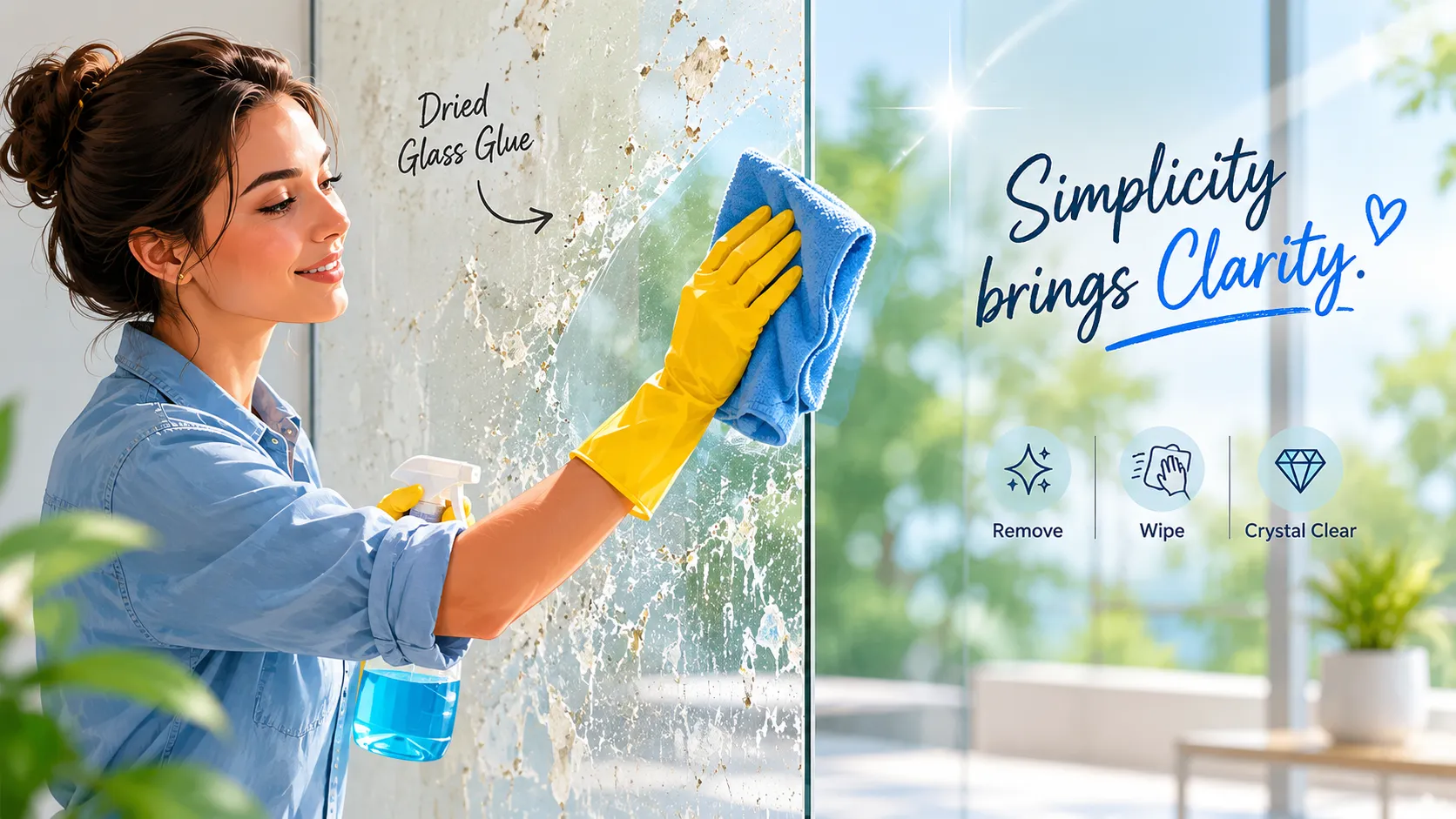
Few household problems are more frustrating than finding a hard patch of glue stuck to a beautiful piece of glass. Maybe a repair project went wrong, a sticker left behind a stubborn adhesive, or a bead of silicone spread farther than expected. At first glance, it can feel like the glass is ruined forever. The good news is that glass is one of the easiest surfaces to clean when you understand how adhesives behave. Because glass is non-porous, many glues sit on the surface instead of soaking deep into the material. That means the right combination of patience, heat, solvents, and gentle scraping can usually restore the glass without damage.
Recent cleaning guides and adhesive manufacturers agree that acetone remains one of the most effective solutions for removing cured super glue from glass, while warm soapy water and careful scraping are often the safest first steps. Experts also recommend holding razor blades at a shallow angle and lubricating the surface to reduce the risk of scratches. The real trick is knowing that not every adhesive behaves the same way. Super glue, silicone, construction adhesives, and sticker residue all require different strategies. Treating them as if they are identical can create cloudy marks, damage tinted coatings, or even make the cleanup harder. Think of adhesive removal like solving a puzzle rather than fighting a battle. Instead of attacking the glue with brute force, you gradually weaken its grip until it lets go.
Why Adhesives Bond So Strongly to Glass
Glass may look perfectly smooth, but under magnification it contains tiny irregularities that adhesives can grip. Modern glues are designed to spread into an extremely thin layer, creating maximum contact with the surface. This wide contact area forms a surprisingly strong bond. Cyanoacrylate, commonly called super glue, hardens rapidly when exposed to moisture and forms a rigid plastic-like structure. Silicone works differently by curing into a flexible rubber seal that can stretch and absorb movement.
The non-porous nature of glass is both a blessing and a challenge. It prevents many adhesives from penetrating deeply, which helps with eventual removal. At the same time, it allows certain glues to create a nearly perfect surface bond. That is why a tiny drop of glue can seem impossible to remove.
The type of adhesive matters just as much as the glass itself. Common varieties include:
| Adhesive Type | Main Characteristic | Best Removal Method |
|---|---|---|
| Super Glue | Hard and brittle | Acetone and careful scraping |
| Silicone | Flexible and rubbery | Cutting and peeling |
| Sticker Adhesive | Soft residue | Alcohol or vinegar |
| Construction Adhesive | Thick and durable | Heat plus solvent |
Understanding which adhesive you are dealing with prevents unnecessary damage and saves time.
Preparing Before You Remove Glue
Rushing into adhesive removal often creates more problems than the glue itself. Scratches usually happen because people grab the nearest metal tool and start scraping aggressively. Cloudy marks often appear because a strong solvent was left sitting on the glass too long. Preparation reduces both risks.
Gather a few basic supplies before starting:
- Warm water
- Mild dish soap
- Microfiber cloths
- Plastic scraper or old credit card
- Acetone or nail polish remover
- Rubbing alcohol
- White vinegar
- Fresh razor blade for plain untreated glass
- Protective gloves
Cleaning the surface first is surprisingly important. Dust and grit trapped beneath a scraper can create scratches that have nothing to do with the adhesive itself. Wash the glass with soapy water and dry it before applying any solvent.
Safety should not be ignored either. Acetone evaporates quickly and should be used in a well-ventilated area. Gloves help prevent skin irritation, and chemicals should always be kept away from open flames. If you are working on coated, tinted, or decorative glass, always test a hidden corner before treating the entire surface.
The Safest Way to Loosen Glue Without Scratching
Imagine trying to remove chewing gum from a sidewalk. You would not attack it with a hammer because force alone is not the answer. Glue works the same way. The safest approach is to weaken the bond before attempting removal.
Warm water mixed with dish soap is often the perfect starting point. Soaking the affected area for an extended period softens many water-sensitive adhesives and helps lift dirt from around the edges. Even if this does not remove the glue completely, it makes the next step easier.
Plastic scrapers are another underrated tool. An old credit card or nylon scraper can slip under softened adhesive without cutting into the glass. Work slowly from the edges instead of pushing directly against the center. The goal is to encourage the glue to release naturally.
If the adhesive remains stubborn, avoid increasing force immediately. Instead, repeat the soaking process or introduce a suitable solvent. Patience is often faster than repairing scratched glass later.
Heat and Solvent Methods That Actually Work
Heat can be remarkably effective because many adhesives soften as temperatures rise. A hair dryer set to medium heat often provides enough warmth to loosen sticker glue and some silicone products. Keep the dryer moving instead of concentrating heat in one spot, especially on thin glass panels.
For tougher jobs, solvents become necessary. Current adhesive removal guides consistently recommend acetone as one of the fastest ways to dissolve super glue on glass surfaces. Rubbing alcohol and vinegar are gentler alternatives that work well on lighter residues. Here is a simple comparison:
| Solvent | Best For | Notes |
|---|---|---|
| Acetone | Super glue | Fast and highly effective |
| Rubbing Alcohol | Light adhesive films | Gentle on many surfaces |
| White Vinegar | Sticker residue | Natural option |
| Warm Soapy Water | Fresh glue | Safest first step |
Apply the solvent with a cotton cloth instead of pouring it directly onto the glass. Let it sit for several minutes so it can weaken the adhesive. Once softened, wipe or gently scrape the residue away.
Heat and solvent often work best together. Warm the glue first, apply the solvent, and then remove the softened material. This layered approach reduces the amount of scraping needed.
What to Avoid Around Tinted or Coated Glass
Modern windows, mirrors, and decorative panels often include special coatings that improve energy efficiency or appearance. These layers can be far more delicate than the glass itself.
Strong solvents should never be applied without testing a hidden area first. Acetone that works perfectly on plain glass may damage protective films or decorative finishes. Cleaning experts also warn that leftover acetone residue should not remain on certain glass surfaces for long periods. Avoid these common mistakes:
- Scraping with chipped or dirty blades
- Using excessive pressure
- Applying industrial chemicals without testing
- Mixing multiple solvents together
- Heating coated glass too aggressively

Orin Cassidy is a 38-year-old American content creator from Spokane, Washington. With a professional background in business communications and years of publishing online resource articles, he writes practical content covering materials, equipment, and workplace best practices. His articles for rawmaterialsupply.xyz emphasize clarity, accuracy, and dependable research for everyday readers.